Mobile App Ecosystems Driving Tournament Prep Among Austrian Card Enthusiasts
Geschrieben von Logan Russell · 26.8.2026

Mobile App Ecosystems Driving Tournament Prep Among Austrian Card Enthusiasts
Card enthusiasts across Austria have turned to integrated mobile app ecosystems for structured tournament preparation, and these platforms now support everything from hand analysis to real-time scenario simulation. Data from industry reports shows steady growth in app usage among players preparing for live events, while developers continue to refine tools that align with the specific demands of European tournament circuits.
Expansion of Digital Preparation Tools
Research indicates that mobile applications have replaced many traditional study methods such as printed books and static spreadsheets, since users gain instant access to databases containing millions of hands and dynamic solvers that adjust ranges based on stack sizes and positions. Austrian players often combine multiple apps within a single workflow, pulling hand histories from one platform and feeding them into analysis engines on another, which creates a seamless loop between study sessions and practice play.
Figures reveal that participation in regional card events has remained consistent through 2025 and into 2026, with August tournaments in cities like Vienna and Salzburg drawing competitors who rely on these digital resources for last-minute adjustments. App developers respond by releasing seasonal updates that incorporate new tournament structures announced by local organizers, allowing users to simulate exact payout ladders and blind schedules weeks in advance.
Core Features Supporting Tournament Readiness
Modern ecosystems bundle several capabilities that address different stages of preparation. Push notifications alert users when specific opponents appear in upcoming events, while integrated video libraries deliver concise breakdowns of common river spots. Range construction tools let players build custom preflop charts that sync across devices, and community forums embedded inside the apps host discussions moderated by experienced regulars who share anonymized data from recent Austrian festivals.
Users frequently export session results directly into tracking software that calculates expected value metrics over large sample sizes, and this feedback loop helps identify leaks before they surface at the table. Observers note that the ability to practice against AI opponents calibrated to local player tendencies gives Austrian card enthusiasts a measurable edge when transitioning from online qualifiers to live final tables.
Community Integration and Local Trends
App-based leaderboards now track performance in virtual satellite tournaments that mirror the format of major Austrian series, and top finishers receive invitations to exclusive study groups. These groups exchange annotated hand histories and discuss adjustments for specific venues, such as the variable lighting conditions at certain casino properties that affect physical tells. Data shows increased cross-border collaboration as well, with players in Austria connecting through shared app servers to players in neighboring countries for joint review sessions.
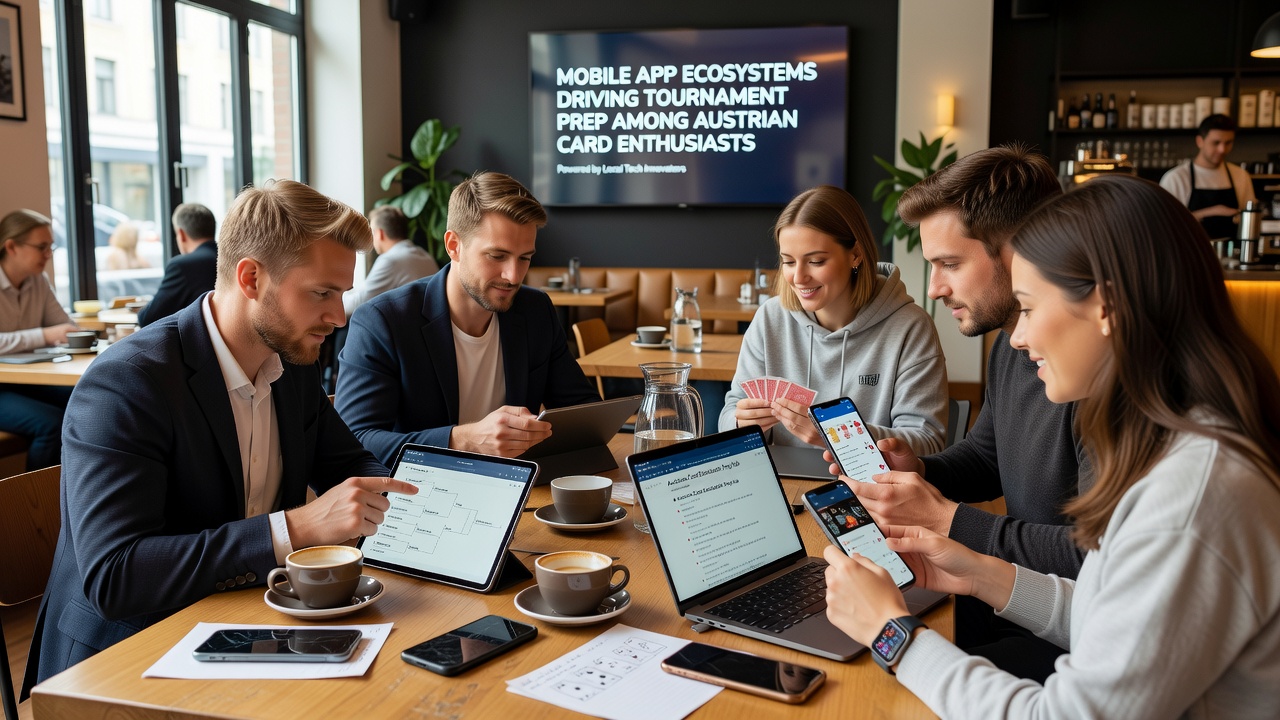
According to a 2025 study published by the European Institute for Digital Leisure, mobile app adoption among recreational card players in Central Europe rose by 27 percent year-over-year, driven largely by improved offline functionality that permits study during travel between regional events. Austrian users particularly value features that account for local tax regulations on winnings, since several apps now include calculators that factor in these requirements when projecting final payouts.
August 2026 Tournament Context
Several high-profile card festivals scheduled for August 2026 have prompted developers to push specialized modules that simulate the exact structures announced by organizers. Players report using these tools to rehearse short-stack survival strategies and final-table negotiation tactics in advance, while live streaming integrations allow remote observers to follow real-time action and compare it against app-generated benchmarks. The timing aligns with summer travel patterns, when many Austrian enthusiasts combine festival participation with vacations across the Alps.
Industry associations such as the European Gaming and Betting Association have documented how app ecosystems reduce barriers for newer participants by offering guided onboarding paths that progress from basic equity calculations to advanced multi-street planning. These pathways incorporate localized examples drawn from past Austrian events, helping users recognize patterns unique to domestic player pools.
Conclusion
Mobile app ecosystems continue to shape how Austrian card enthusiasts approach tournament preparation through interconnected tools that support analysis, simulation, and community exchange. As August 2026 events approach, the integration of real-time data feeds and regulatory-aware calculators suggests further refinement of these platforms. External research from sources including the European Commission digital reports and the Australian Gaming Research Institute provides additional context on adoption patterns across regions. The ongoing evolution of these systems reflects broader shifts in how participants access and apply strategic information ahead of live competition.