Bonus Mechanics and Their Strategic Implications for Players in Regulated Jurisdictions
Geschrieben von Jordan Carter · 7.9.2026
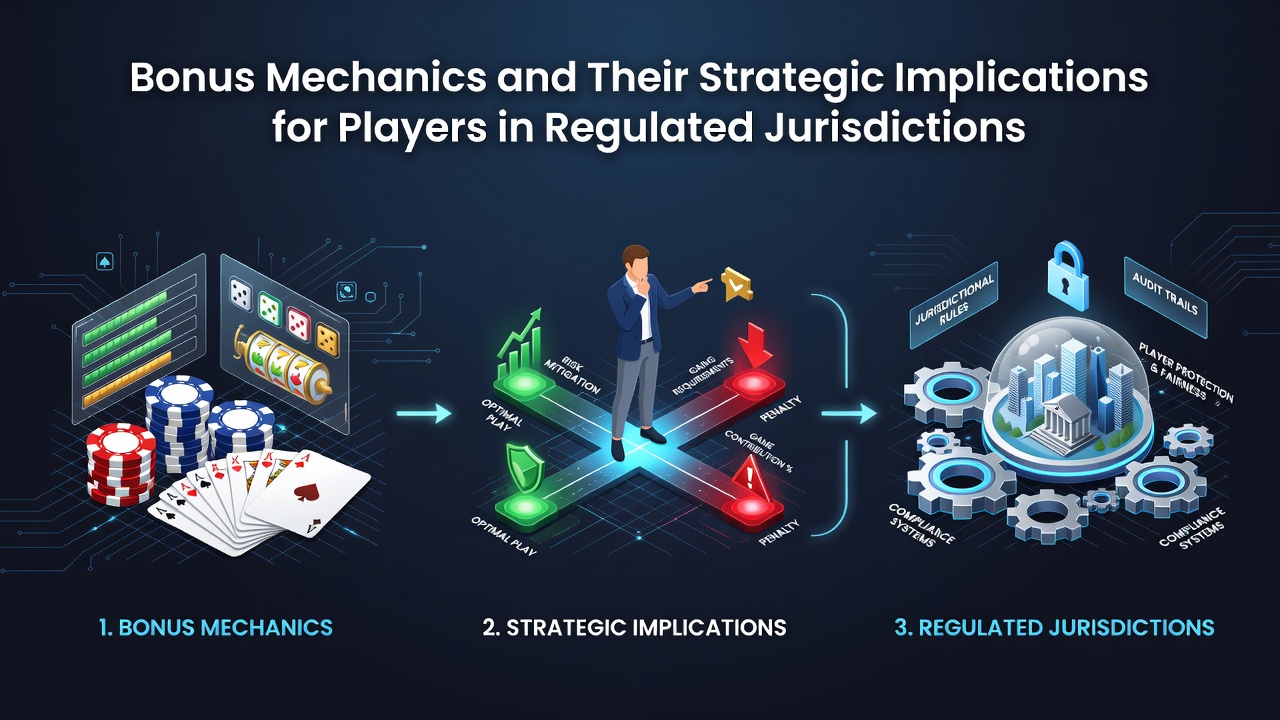
Bonus Mechanics and Their Strategic Implications for Players in Regulated Jurisdictions
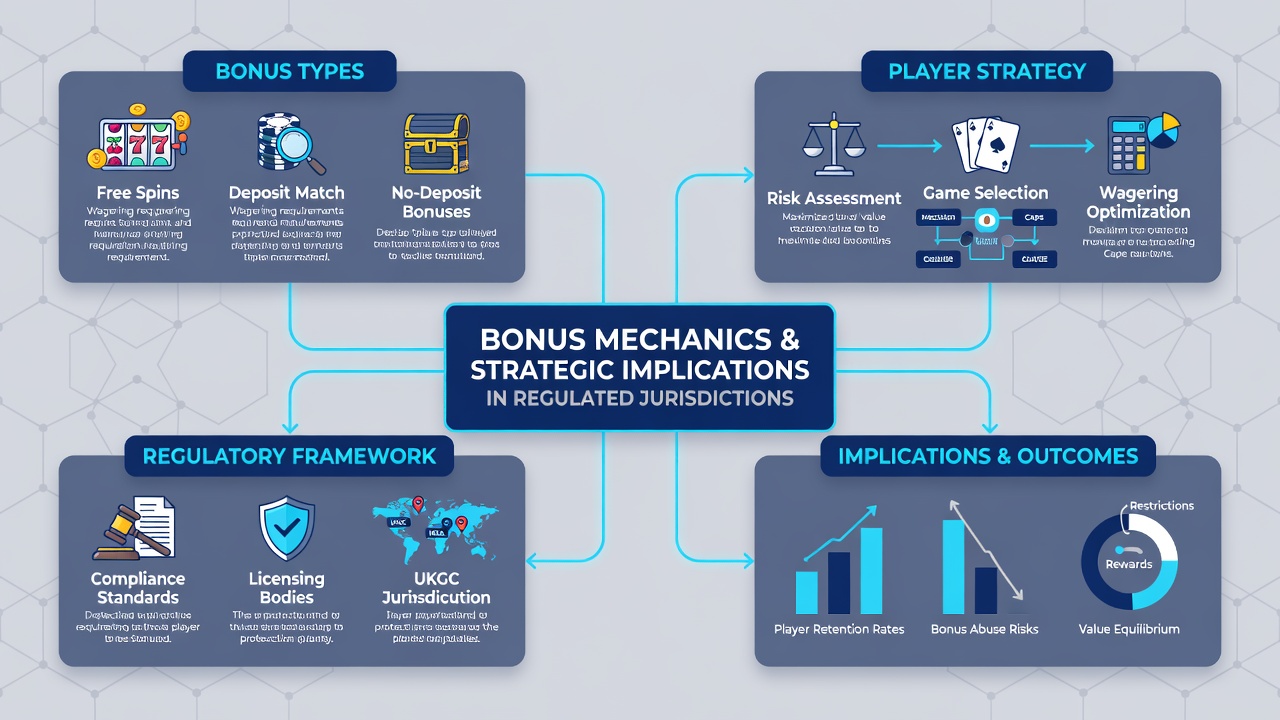
Bonus mechanics in regulated gambling environments consist of structured incentives that operators deploy to attract and retain participants, yet these systems operate under strict oversight from government agencies that enforce transparency and consumer protection standards. Data from multiple jurisdictions reveals that common formats include deposit match offers, no-deposit credits, free spin allocations, cashback percentages, and tiered loyalty rewards, each governed by parameters such as wagering multipliers, contribution percentages per game category, maximum stake limits during playthrough, and expiration windows that range from seven days to ninety days.
Regulators in the United States, Canada, and the European Union require operators to publish complete terms before any bonus activates, which allows participants to evaluate real value through straightforward calculations of expected return after requirements are met. Figures released by the New Jersey Division of Gaming Enforcement show that average wagering multiples on deposit matches settled between thirty-five times and forty-five times the combined deposit plus bonus amount during the 2025 reporting period, with slot contributions capped at one hundred percent while table games often receive only twenty percent or less toward completion.
Core Components That Shape Bonus Value
Operators calculate bonus viability through several interlocking rules that directly affect player outcomes, and those who examine contribution tables before accepting an offer frequently discover that high-volatility slots accelerate requirement fulfillment whereas low-volatility options extend the timeline. Time limits function as hard cutoffs that reset progress if unmet, while maximum bet restrictions prevent large wagers from counting toward playthrough and sometimes void remaining bonus funds when violated. Game weighting lists further restrict eligible titles, excluding certain progressive jackpot machines or live dealer tables from any contribution, which forces strategic selection among approved options to meet targets efficiently.
Research compiled by the Alcohol and Gaming Commission of Ontario indicates that players who restrict activity to fully contributing games reduce average completion time by twenty-eight percent compared with those who spread wagers across mixed categories. Loyalty programs add another layer through point accumulation that converts into additional credits or free play, yet these systems often reset monthly or quarterly and carry their own separate playthrough obligations that stack with initial bonuses.
Regulatory Variations Across Regions
Jurisdictions impose distinct caps and disclosure rules that alter how bonuses function in practice, and differences become apparent when comparing licensing frameworks in New Jersey, Ontario, and several EU member states. German authorities, for instance, mandate that bonus amounts cannot exceed one hundred euros per offer and require a minimum twenty-four-hour cooling period between activations, while Australian state regulators focus on advertising accuracy and prohibit phrases that imply guaranteed wins. These rules create environments where participants must review jurisdiction-specific statutes rather than assume uniform mechanics apply everywhere.
September 2026 marks the scheduled rollout of updated transparency standards in several Canadian provinces, requiring operators to display real-time progress trackers for active bonuses inside player accounts, a change that follows pilot programs conducted earlier in the decade. Similar updates are under discussion in select EU markets, where authorities aim to standardize the presentation of contribution rates across all licensed platforms.
Strategic Approaches Players Apply to Maximize Outcomes
Participants who succeed over repeated cycles treat bonuses as mathematical exercises rather than marketing hooks, calculating effective house edge after weighting and playthrough to determine whether an offer improves overall bankroll expectations. Bankroll segmentation separates bonus funds from cash deposits, allowing separate tracking that prevents accidental violations of maximum bet rules during requirement completion. Some players concentrate activity on specific game types known for high contribution rates while monitoring volatility to balance risk of total loss against the probability of meeting targets before expiration.
Case examples documented in industry reports demonstrate that those who combine multiple smaller bonuses across different operators often achieve higher aggregate value than single large offers, provided they maintain strict records of each set of terms. Time management plays an equally critical role, since overlapping expiration dates can create conflicts that force rushed decisions and higher variance in results.
Conclusion
Bonus mechanics remain central to player engagement strategies in regulated markets, yet their value depends entirely on precise understanding of wagering requirements, contribution tables, and jurisdictional constraints that vary by licensing authority. Data from government sources continues to show measurable differences in completion rates when participants apply structured evaluation methods before acceptance. As additional transparency measures take effect in 2026, the information available for these decisions will expand, enabling more accurate assessments across platforms.